Innovation Hackathon
I pitched an organisation-wide hackathon at G-Star, then owned everything from leadership buy-in to the activity structure teams ran on the day, and built the framework so it could run again.
An idea, sold to the board
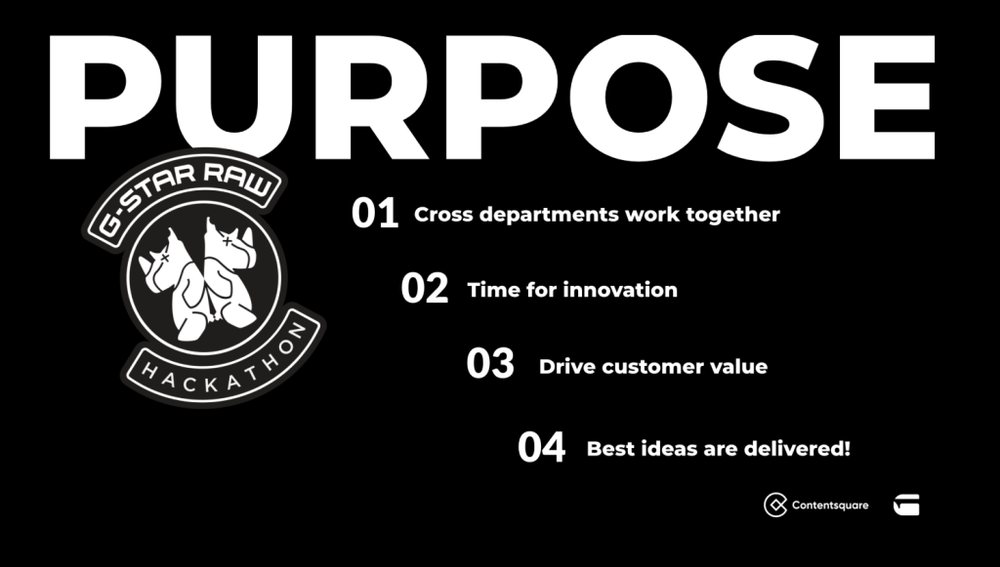
To push a more innovative mindset and pull the organisation towards shared goals, I proposed a company-wide 1.5-day hackathon. I built the case, presented the benefits and the effort involved to the CFO and CHRO, and got approval to own and drive the whole thing.
My condition to myself: this could not be a one-off. It had to leave something behind.
Built to run more than once
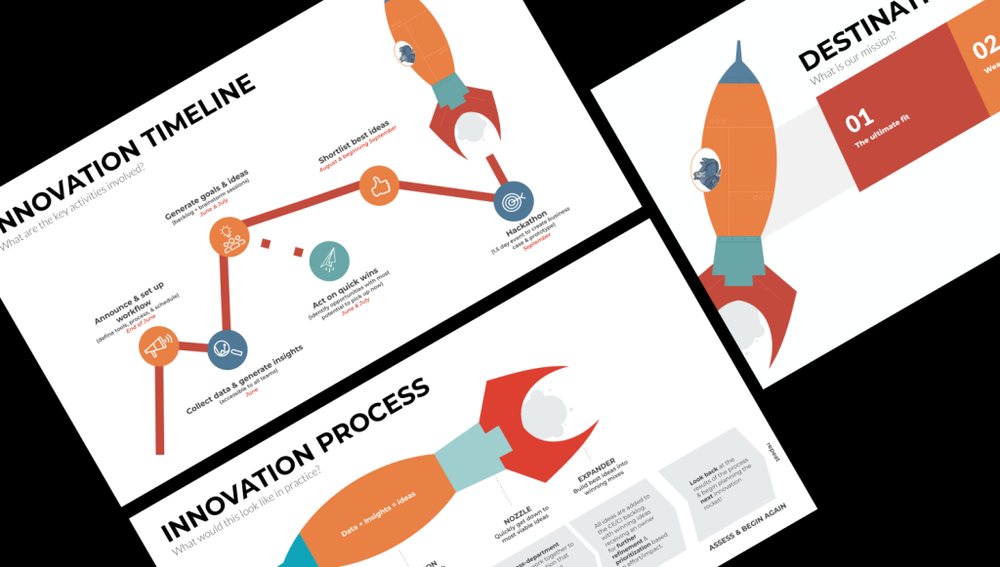
Working from a destination set by upper management, I defined the moving parts over a few months:
- An innovation framework built around two mission statements
- Mission research: everything the company already knew about each opportunity space
- Coordination: timelines and the alignment work leading up to the day
I also brought in one of our suppliers as a partner to help plan and facilitate.
Mini kick-off sessions across departments. An ambassador group spreading the word inside their own teams. Posters, an agenda, awards.
Everything that made the day feel worth showing up for.
Momentum before the day
In the months before the event we gathered insights from across the business, announced it early, and built a network of people who wanted it to succeed. By the time the day arrived, the whole company knew it was coming and why.
A path for teams new to design thinking
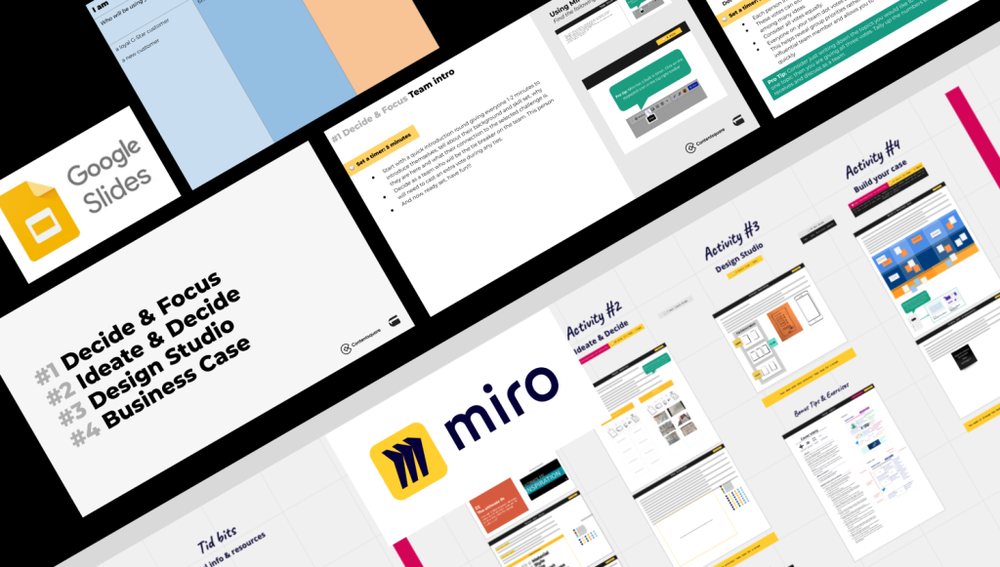
Many teams had never done design thinking. So I built a clear structure for the day, taking a design sprint as the starting point, so every team could move fast towards a real solution:
- Decide & Focus
- Ideate & Decide
- Design Studio
- Business Case
It lived in a shared deck and a Miro board, so teams could pick the path that fit their mission.
"Not only was it an absolute blast, the effect of the day was tangible."
More collaboration across departments afterwards, and a framework the company could re-run.
What was left behind
The point was never one good day. It was a repeatable way for the organisation to turn a mission into working ideas, and a group of people who now knew how to run it.
Need something facilitated?
Framing sessions, decision sessions, and design sprints, run against your real problem.