
Luxury Customer Research
With the stores closed, De Bijenkorf needed to define a high-end online experience for its luxury customers. I led the cross-department research that made that customer legible.
The stores were closed. The question: how do you give a luxury customer the same experience online?
The goal I set for the research: a data-driven understanding of that customer, and the business opportunities around them.
A customer nobody could see clearly
De Bijenkorf needed to define a high-end online proposition that matched the store experience for its most valuable segment. First it had to understand who that customer actually was.
One team, one aligned set of findings
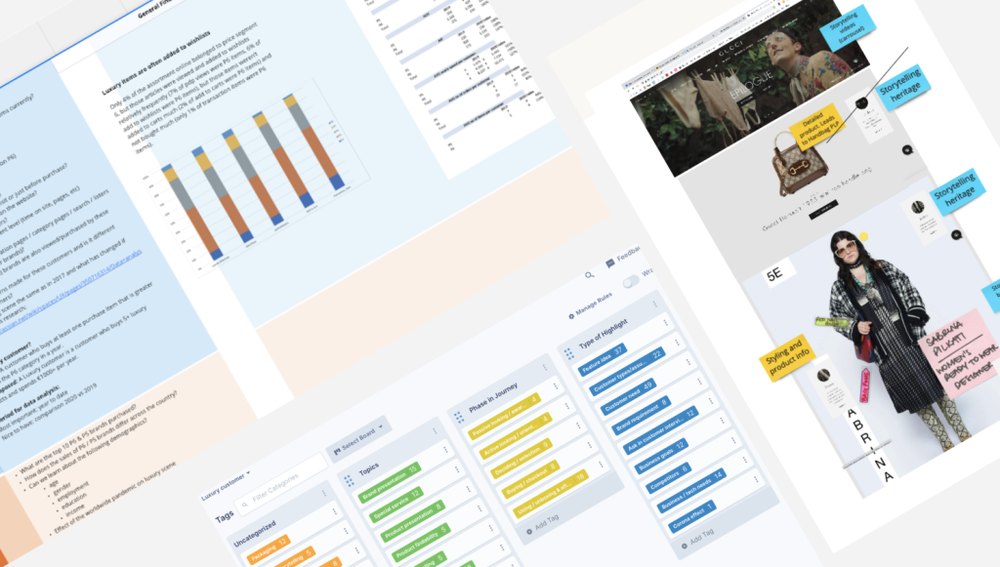
I led a cross-department team of researchers: organised the alignment sessions, defined the methodology, and pulled every open question the business had into one shared plan. We ran:
- Competitor analysis
- Customer surveys
- Google Analytics review
- SessionCam analysis
- User focus groups
Three customer types, defined and designed
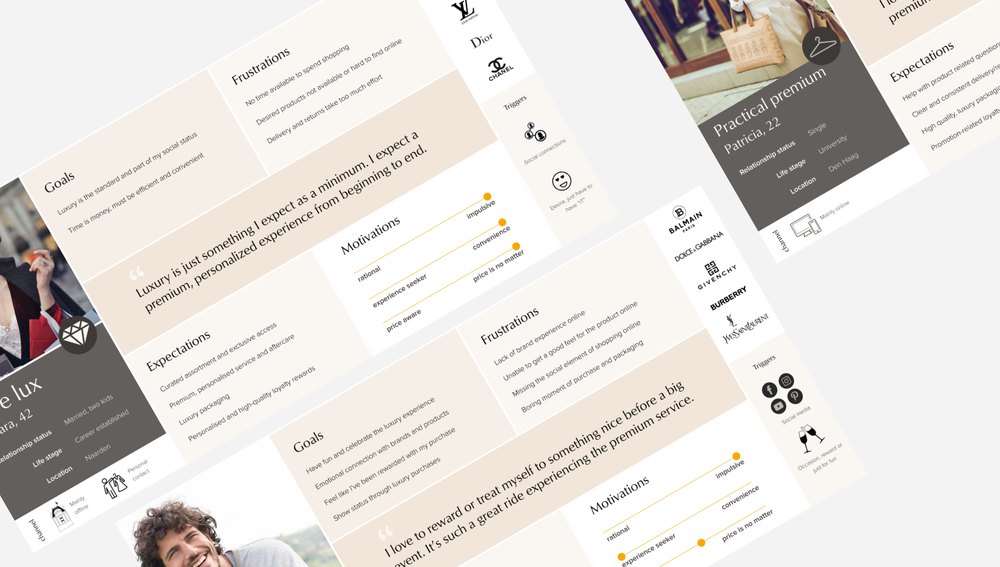
From all of the data, I facilitated a brainstorm with a fellow researcher to define three customer types, keeping the end goal of the research in mind so every relevant type was covered. I then refined the personas and designed the visuals.
Pain points and opportunities, made visible
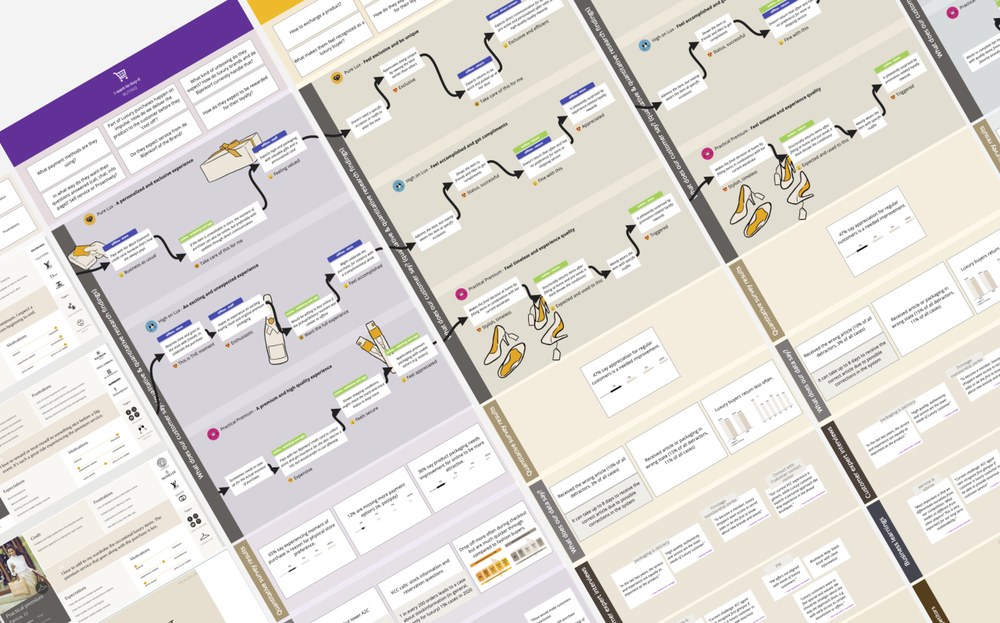
I coordinated the collection of all the research into one customer journey map. I set the data template; the UX researcher drafted the journey flow from the insights. The result was a genuine cross-department effort.
Personas, a journey map and a service blueprint, shared with over 100 colleagues.
Used to steer the luxury proposition across teams.
A shared picture of the customer
Before this, "the luxury customer" was an assumption held differently by every team. After it, there was one picture, backed by data, that the whole business could design and plan against.
Have a customer you can't see clearly?
Research that turns a fuzzy segment into something the whole business can act on.