
Vibes
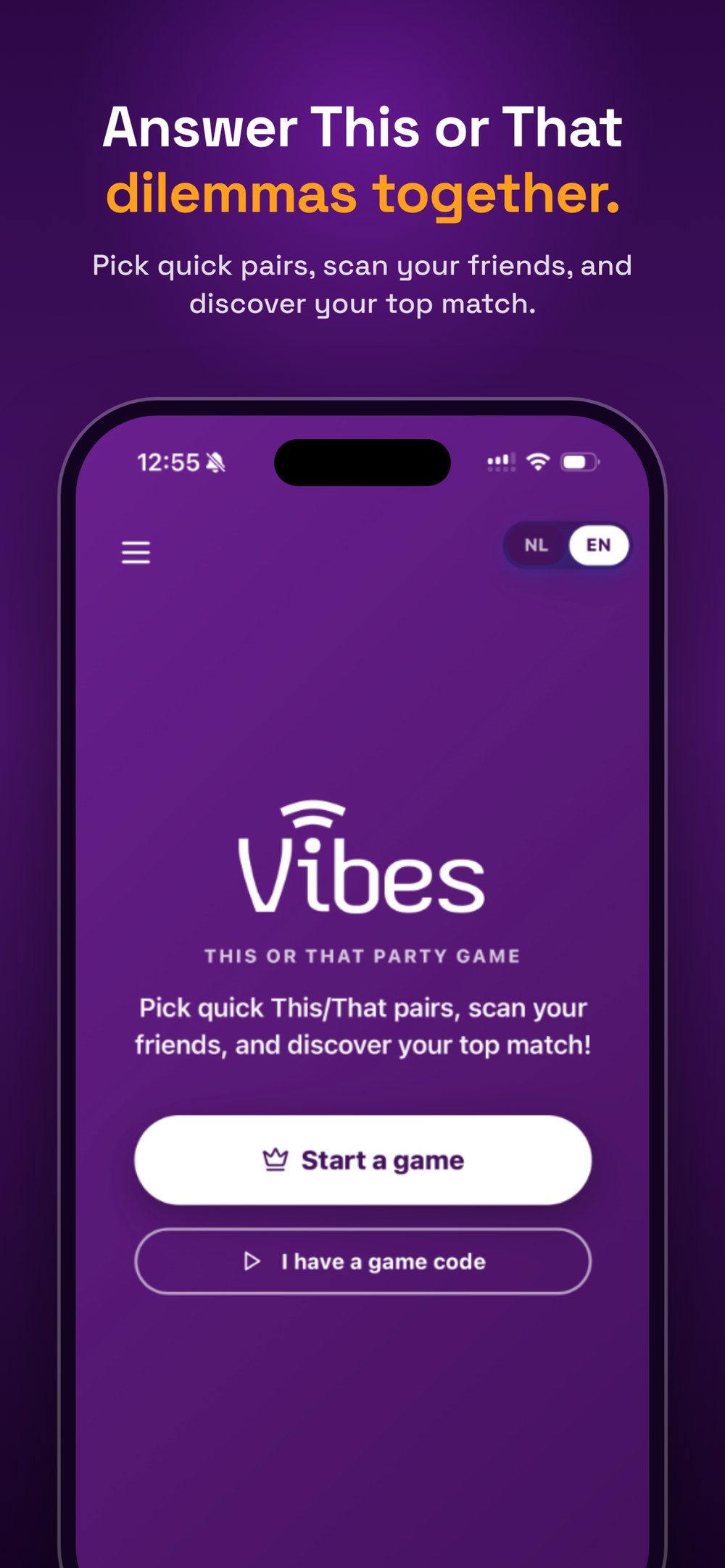
A fast “this or that” group game for finding out who in the room thinks like you. One person hosts, everyone else joins with a code.
Group icebreakers come with an awkward trade-off
They're cringe, slow, or too personal. They need one person to facilitate. They need materials, prep, downloads, or accounts. And they go passive fast: a few people lead while everyone else watches.
I wanted something that could make a room feel more connected in a couple of minutes. Social without being forced, quick without feeling empty, and simple enough that a teacher, parent, or friend could start it without explaining rules for five minutes.
Groups already in the same room: friends at a party, families at home, students in a classroom, teams at a social event, small groups wanting something lighter than a quiz. The host starts a game on one screen; everyone else joins from their phone with a code. No install, no account for players.
Three things, fast: everyone participates instead of watching; players learn something surprising about the people around them; the group gets a memorable payoff, "I match best with that person". The result should start the next conversation.
Join through a normal phone browser, no install. Fast enough for a host to run in front of a group. Live shared state for many players at once. Host works on a laptop or smartboard as well as a phone. Inexpensive to run, with room to scale if people share it.
A browser-first multiplayer party game
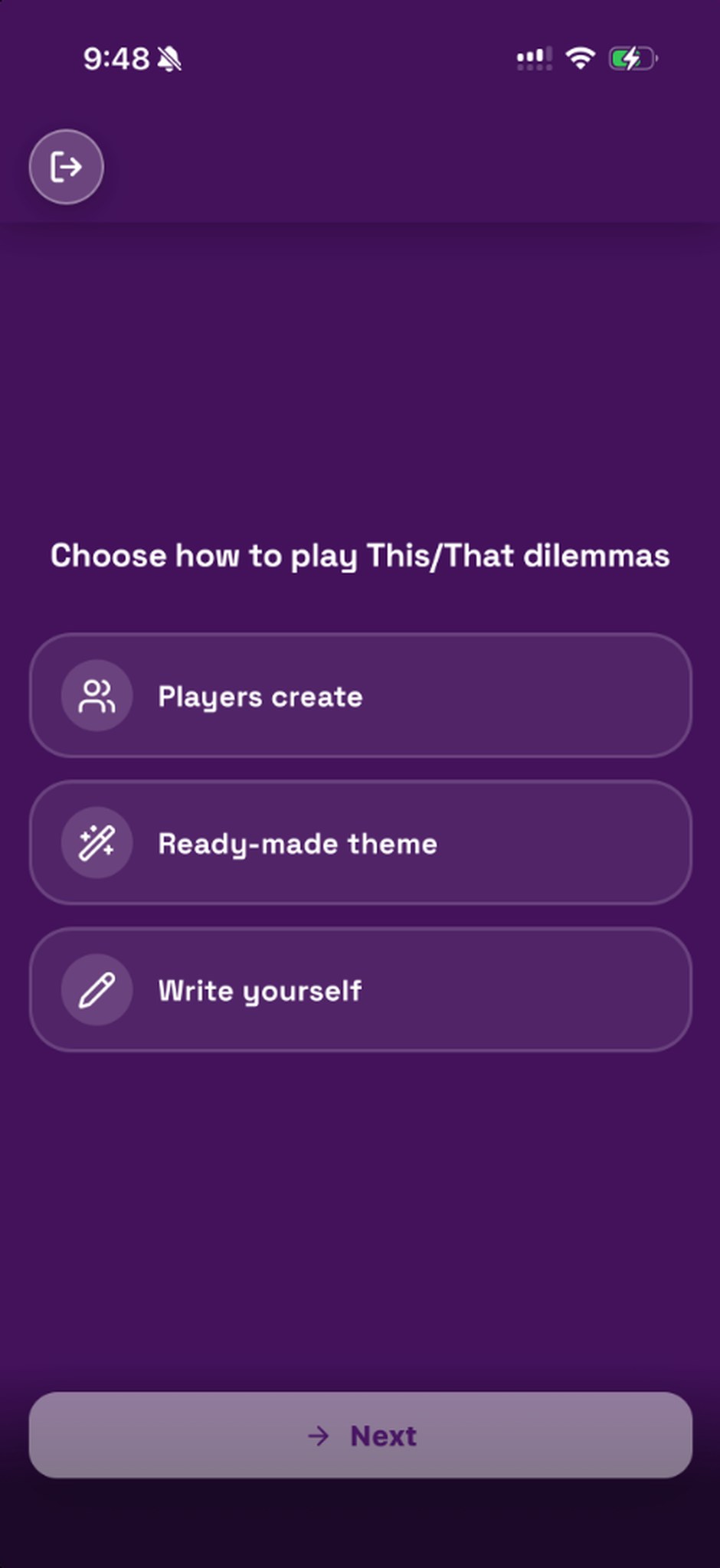
The original idea used physical cards with permanent QR codes. It became a web-first game with the same social goal and far less friction.
A host creates a room, chooses how questions are handled, and brings a group into a live game with a code. Question formats: players write their own dilemmas, pick a ready-made theme, write questions for a specific group, or use AI-assisted generation for a topic or occasion. Loose enough for a party, useful for a teacher who wants questions suited to a class. Dutch and English, with privacy and terms built in from the start.
Fast, low-stakes decisions, then a small social reveal
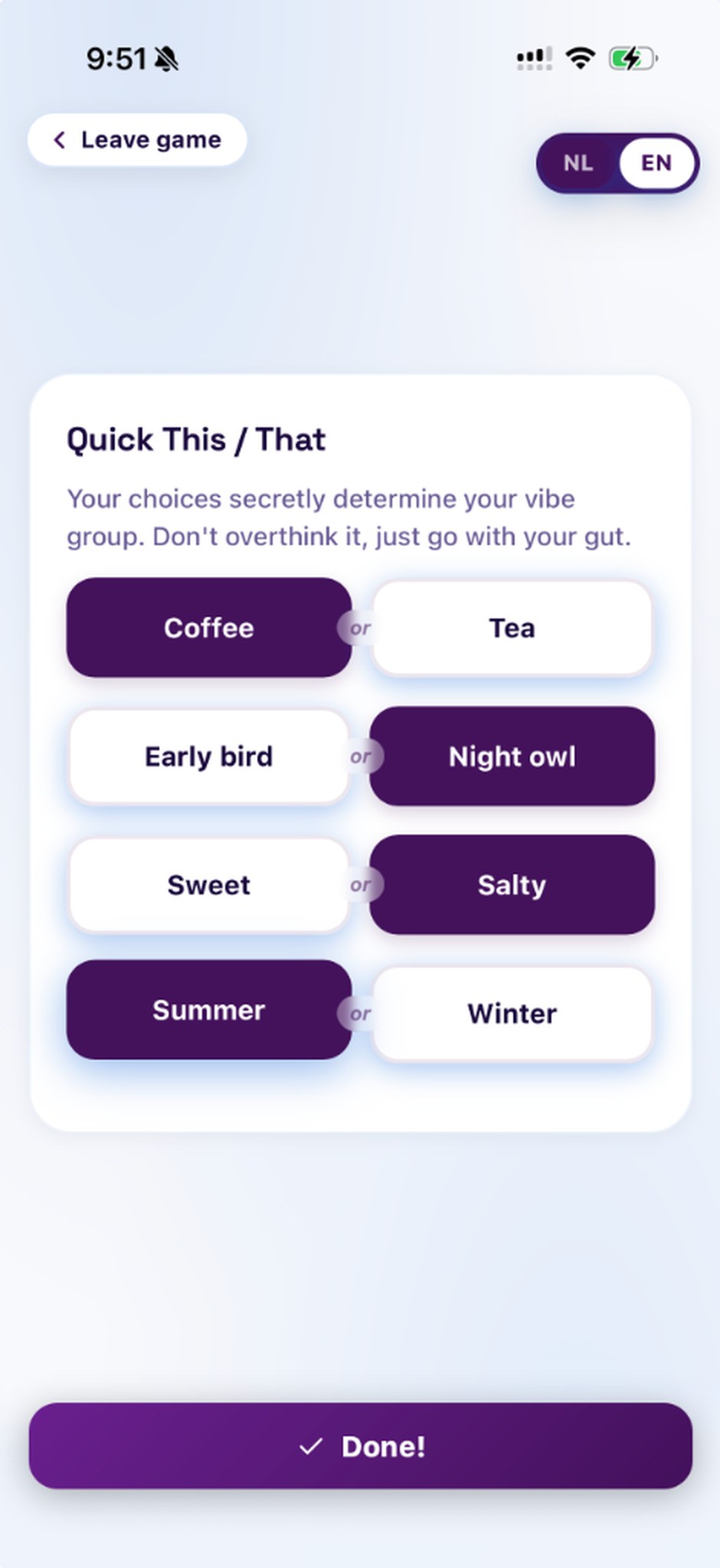
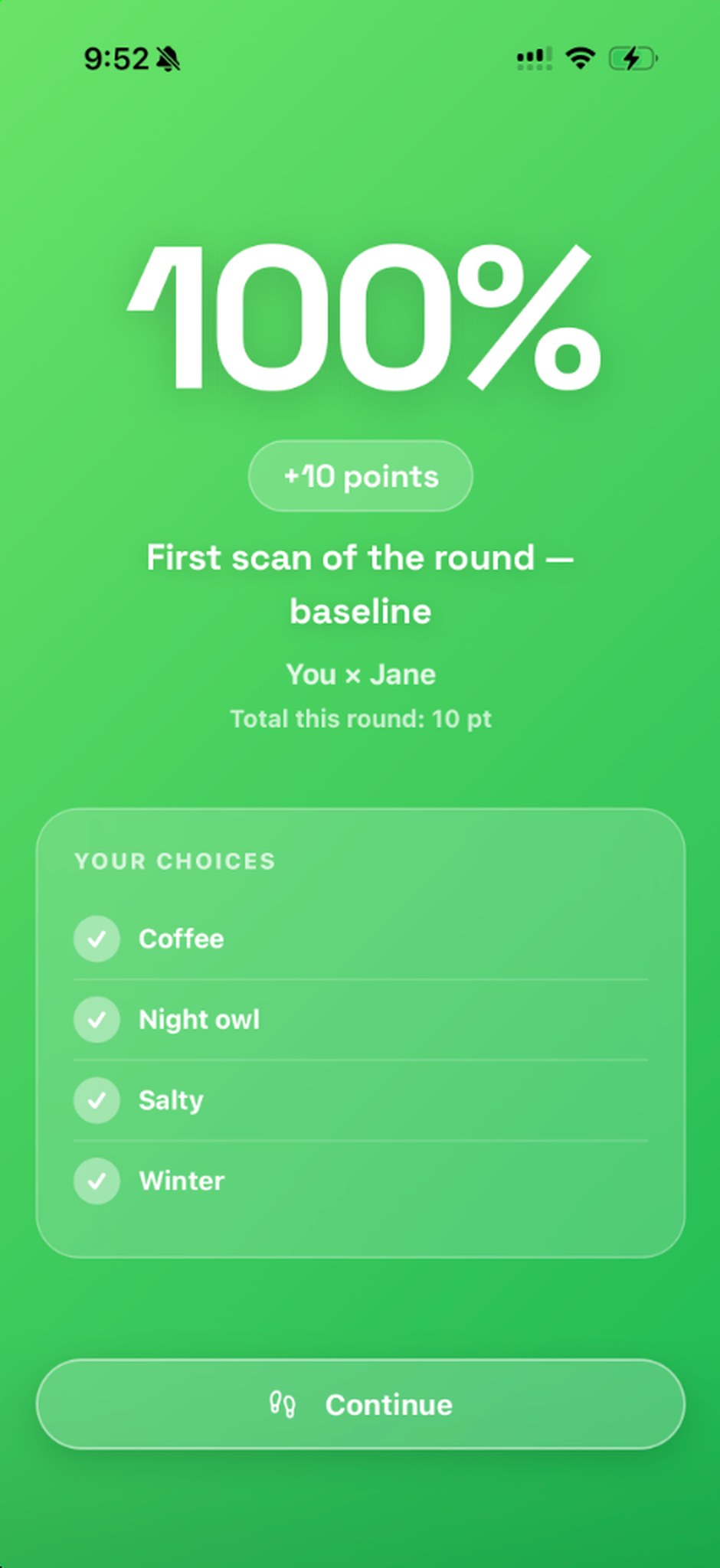
Players answer "this or that" dilemmas, predict what others chose, then see where they align. The game turns that into match percentages, shared patterns, and a clear best-match result.
The important outcome isn't a score. It's the moment two people realise they read each other wrong: "Wait, I thought you would definitely choose the other one." That reaction is the product.
Built in one day for a Hogeschool Utrecht team event. In the App Store within two weeks.
Build to online and working to submitted, all inside a week. Live a week later, no review hold-ups.
A one-day game that was too good to leave there
It started as a quick game for a team event. It landed so well that I turned it into my first iOS app, using AI to learn what to do and how while staying in the loop on the bigger product decisions.
Then the real work: designing a sequence that builds momentum, round one teaches the game, round two makes people play properly, later rounds create the "that was fun, again" feeling. And removing friction everywhere: fewer steps before a group can start, no accounts to join, hosting simple enough for a classroom, a clearer navigation, a host flow that works on a big screen while players use phones.
Web-first, with Supabase for shared state and realtime, and Capacitor for mobile.
Fast to build, cheap at small scale, and players still join instantly with nothing to install.
Making the viral loop safe before it gets expensive
A room of students becomes many more rooms after school, which is exactly the sharing Vibes should encourage. So before any paid plan exists, the work is on free usage limits, account progression, abuse prevention, privacy, and infrastructure cost: bounded free hosting, no-account joining, server-side entitlements, idle games that disconnect themselves, and data that's cleared after a retention period. Paid one-week hosting packs come later, once the core loop is proven.
From a card concept to a real multiplayer product
Vibes has moved from physical cards to a functioning multiplayer web game and a mobile app that is live in the App Store, with iteration continuing on bugs, sharing behaviour, the account flow, and the web experience. The focus now is real-world testing, reliability, and a growth model that doesn't turn success into an infrastructure problem.
The proof point still ahead: does a group finish a game and immediately want another one, or send it to the next group.
Have an idea like this?
Bring it to a Framing Session and leave with a brief you could build from.